5 Safe Exercises for Seniors: A Doctor-Backed Guide
Five low-impact exercises - walking, tai chi, yoga, swimming, and strength training - proven to boost balance, mood, and fall prevention.
Published · Updated
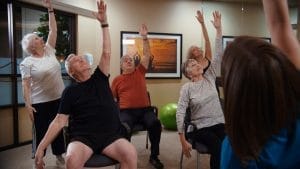
The five safest, most effective exercises for older adults are walking, tai chi, chair or gentle yoga, swimming, and strength-and-balance training. Each is low-impact, scalable to ability, and supports the two outcomes that matter most after age 65: preserving independence and preventing falls. The U.S. Centers for Disease Control and Prevention recommends that adults 65+ get at least 150 minutes of moderate activity plus two days of muscle-strengthening work each week (CDC Physical Activity Guidelines, 2023).
Why does exercise matter so much after 65?
Falls are the leading cause of injury and injury death among older adults, and roughly one in four Americans 65+ falls each year (CDC Older Adult Falls Data, 2024). Regular movement directly reduces that risk by strengthening leg and core muscles, sharpening reaction time, and improving confidence on the feet.
Exercise also protects the brain. As neuroscientist Daniel Levitin, PhD, author of Successful Aging, has argued, consistent physical activity is one of the most powerful interventions for cognitive resilience - more reliable than any supplement currently on the market. Movement boosts blood flow to the hippocampus, improves sleep quality, and lowers rates of depression and anxiety in older adults (National Institute on Aging, 2024).
For more lifestyle context, see our pillar piece on 10 longevity tips for a better life.
What should you do before starting a new routine?
Before your parent laces up sneakers or signs up for a class, schedule a quick visit with their primary care physician. The American Academy of Family Physicians recommends a pre-exercise screening for anyone over 65 with cardiovascular risk factors, joint replacements, or balance concerns (AAFP, 2017).
Light-intensity exerciseActivity you can do while easily holding a conversation - slow walking, gentle stretching, chair yoga.Moderate-intensity exerciseActivity that raises your heart rate and breathing but still lets you talk in short sentences - brisk walking, water aerobics, tai chi.Functional fitnessTraining that mimics daily tasks (standing from a chair, carrying groceries, climbing stairs) to maintain independence.How does walking 30 minutes a day change health outcomes?
Walking is the most accessible exercise on this list. It requires nothing but supportive shoes and lowers risk for heart disease, type 2 diabetes, and dementia (CDC, 2024).
Build up gradually. For example, an 82-year-old who has been mostly sedentary should start with two 10-minute walks per day around the block, then add five minutes each week until reaching 30 continuous minutes. If weather or balance is a concern, indoor mall walking and senior community walking clubs are excellent alternatives.
- Buy supportive, closed-toe walking shoes with non-slip soles.
- Start with 10 minutes a day for the first week.
- Add 5 minutes per week until you reach 30 minutes.
- Use a cane or walker if recommended - these extend independence, they don't shorten it.
- Walk with a buddy whenever possible for safety and accountability.
Why is tai chi often called "meditation in motion"?
Tai chi combines slow, choreographed movements with deep breathing. The National Institute on Aging highlights tai chi as one of the most evidence-supported activities for improving balance and reducing fall risk in older adults (NIA, 2024).
Consider a 78-year-old grandmother who started a 12-week tai chi class at her local senior center after a minor stumble in her kitchen. By the end of the program, she reported feeling steadier carrying laundry up the stairs and sleeping more deeply - outcomes consistent with what the Mayo Clinic describes in its tai chi overview (Mayo Clinic, 2024).
Is yoga safe if your parent has arthritis or limited mobility?
Yes - particularly chair yoga and gentle Hatha yoga. The Arthritis Foundation lists yoga as one of the best low-impact options for stiff joints because poses can be modified or done seated (Arthritis Foundation, 2024).
Yoga also doubles as a stress-management tool. The breathing skills learned on the mat translate to everyday calm - useful for sleep, blood pressure, and anxiety. Pair it with the nutrition strategies in our guide to healthy eating for mental wellness for compounding benefits.
What makes swimming uniquely good for older bodies?
Water supports up to 90% of body weight, which means the joints get a break while the heart and lungs still do meaningful work (CDC Water-Based Exercise, 2024). For seniors with osteoarthritis, hip replacements, or chronic back pain, swimming and water aerobics are often the only cardiovascular workouts that don't trigger flare-ups.
Most YMCAs and community pools offer senior swim or Aqua-Fit classes with lifeguards and instructors trained for older participants. If your parent hasn't been in a pool in decades, a one-on-one intro session is worth the cost.
Why is strength and balance training non-negotiable after 70?
Adults lose 3-8% of muscle mass per decade after age 30, and the rate accelerates after 60 - a process called sarcopenia (National Institutes of Health, overview). Without resistance work, the legs and core that keep your parent upright simply fade.
As geriatrician Louise Aronson, MD, author of Elderhood, has emphasized, strength training in later life isn't about aesthetics - it's about the ability to get up off the toilet, lift a grandchild, and recover from a stumble before it becomes a hospital stay.
Imagine a 75-year-old father who has started gripping the counter when he stands from a kitchen chair. Eight weeks of twice-weekly chair-to-stand drills, light resistance bands, and a seated leg press at a senior fitness class can be enough to restore that confidence. The key is supervision: a certified senior fitness trainer or physical therapist sets the load and watches the form.
How do the five exercises compare?
| Exercise | Primary Benefit | Impact Level | Best For | Typical Cost |
|---|---|---|---|---|
| Walking | Cardiovascular, mood | Low | Almost everyone | $0-$120 (shoes) |
| Tai Chi | Balance, fall prevention | Very low | Unsteady gait, anxiety | $0-$15/class |
| Yoga / Chair Yoga | Flexibility, stress | Low | Arthritis, stiffness | $0-$20/class |
| Swimming | Full-body, joint-safe | None on joints | Joint pain, obesity | $5-$75/month |
| Strength & Balance | Muscle preservation | Low-moderate | Sarcopenia, post-fall | $0-$50/session |
How can you tell if your parent is overdoing it?
Soreness 24-48 hours after a new activity is normal. Chest pain, dizziness, shortness of breath that doesn't ease within a few minutes of rest, or sharp joint pain are not. The Mayo Clinic advises stopping immediately and contacting a physician if any of those occur (Mayo Clinic, 2024).
Also watch for the quiet warning signs: a parent who suddenly avoids stairs, declines a favorite walk, or grips furniture indoors. Those can signal a balance change worth flagging to their doctor - and they push back against the assumptions covered in our piece on the seven myths about aging.
How does sleep and medication timing affect exercise safety?
Poor sleep degrades balance and reaction time the next day. So does taking blood pressure or sedating medications right before a workout. Coordinating exercise around medication schedules matters - see our guide to the best time of day for administering medications for practical timing tips.
Ready to help your parent move with confidence?
Every Aegis Living community offers Life Enrichment programming built around safe, supervised movement - from balance studios designed for fall reduction to chair yoga, walking clubs, and trainer-led strength classes. Find an Aegis Living community near you or contact our team to schedule a tour and see the fitness spaces in person.
Frequently asked questions
How much exercise do seniors actually need each week?
The CDC recommends at least 150 minutes of moderate aerobic activity (such as brisk walking) plus two muscle-strengthening sessions per week for adults 65 and older (CDC, 2023). Balance-focused activities like tai chi should be added at least three days a week for anyone at risk of falling.
Is it ever too late to start exercising?
No. Research summarized by the National Institute on Aging shows measurable strength and balance gains even in adults in their 80s and 90s when they begin a supervised program (NIA, 2024). Start slowly, get medical clearance, and progress gradually.
What exercise is safest for seniors with arthritis?
Water-based exercise and chair yoga are typically the gentlest on inflamed joints, according to the Arthritis Foundation (Arthritis Foundation, 2024). Warm-water pools (around 83-88°F) can also ease stiffness before stretching.
Can exercise really reduce the risk of falls?
Yes. The CDC lists evidence-based balance programs like tai chi and Otago among the most effective fall-prevention interventions for community-dwelling older adults (CDC STEADI, 2024). Combining strength, balance, and walking yields the best results.
Should seniors lift weights?
Yes - under guidance. Resistance training preserves muscle mass and bone density, but form matters more than load. A certified senior fitness trainer or physical therapist should design the initial program, and resistance bands or machines are often safer than free weights for beginners.
What if my parent is afraid of falling during exercise?
Fear of falling is itself a fall risk because it leads to inactivity and muscle loss. Start with seated exercises, supported standing drills (holding a sturdy counter), or a chair-based class. As Teepa Snow, dementia care educator and founder of Positive Approach to Care, often emphasizes about caregiving: meet the person where they are today, not where you wish they were - the same principle applies to fitness.
Frequently asked questions
- How much exercise do seniors actually need each week?
- The CDC recommends at least 150 minutes of moderate aerobic activity plus two muscle-strengthening sessions per week for adults 65 and older. Balance work like tai chi should be added at least three days a week for anyone at fall risk.
- Is it ever too late to start exercising?
- No. Adults in their 80s and 90s show measurable strength and balance improvements with supervised programs, according to the National Institute on Aging. Start slowly, get medical clearance, and build up gradually.
- What exercise is safest for seniors with arthritis?
- Water-based exercise and chair yoga are typically the gentlest on inflamed joints. Warm-water pools around 83-88°F can also ease stiffness before stretching or strength work.
- Can exercise really reduce the risk of falls?
- Yes. The CDC identifies balance-focused programs like tai chi and Otago as among the most effective fall-prevention tools. Combining strength, balance, and walking yields the strongest results.
- Should seniors lift weights?
- Yes, but with guidance. Resistance training protects muscle mass and bone density, yet form matters more than weight. A certified senior fitness trainer or physical therapist should design the starting program.
- What if my parent is afraid of falling during exercise?
- Begin with seated drills or supported standing exercises while holding a sturdy counter. Confidence rebuilds as strength returns - fear of falling itself increases fall risk by promoting inactivity.
Related reading
- When Is the Best Time of Day to Take Medications?
When your parent takes a pill matters as much as which pill they take. Here's how timing affects blood pressure, cholesterol, and bone medic…
- 10 Longevity Tips for Seniors: How to Live Better, Longer
Ten science-backed longevity habits for older adults, from daily movement and Blue Zones eating to sleep, purpose, and social connection.…
- Seven Myths About Aging
As baby boomers gracefully age into retirement and their next phase of life, we want to dispel some of the common myths about aging. Myths t…
- Healthy eating for mental wellness
We all know the foods we eat have an effect on every part of the body. A balanced, nutritious diet provides you with energy for physical act…
Have questions about senior living?
Our family advisors are here to help — no pressure, no script.