
Early memory support — before a secured neighborhood
Cueing, wayfinding, and dementia-trained staff inside assisted living — with a clear path to Life's Neighborhood® if needs advance.

When transitional care is the right bridge
Repeating questions or missed medications
Still social and mobile, but needs gentle cueing — not 24/7 secured supervision yet.
Getting turned around in familiar places
Wayfinding support and structured routines reduce anxiety before a crisis forces a move.
Caregiver burnout at home
Structured support lets families sleep while preserving dignity and connection.
Earlier is easier
About 6.7 million Americans 65+ live with Alzheimer's (Alzheimer's Association, 2024). Earlier structured support is linked to better quality of life.
What is included
- Dementia-trained caregivers
24/7 cueing, redirection, and compassionate support — without isolating residents from the broader community.
- Clinical oversight
On-site nurses adjust care plans as cognition changes. Licensed under state assisted-living rules in WA, CA, and NV.
- Cognitive Compass & Restore
Brain-health programming plus on-site PT, OT, and speech therapy when ordered by a physician.
- Safety technology
Inspirens AUGi fall management, emergency pendants, and discreet monitoring — not locked doors.
- Full community life
Chef-prepared dining, 200+ activities, couples-together apartments, and the Aegis Living app for family updates.
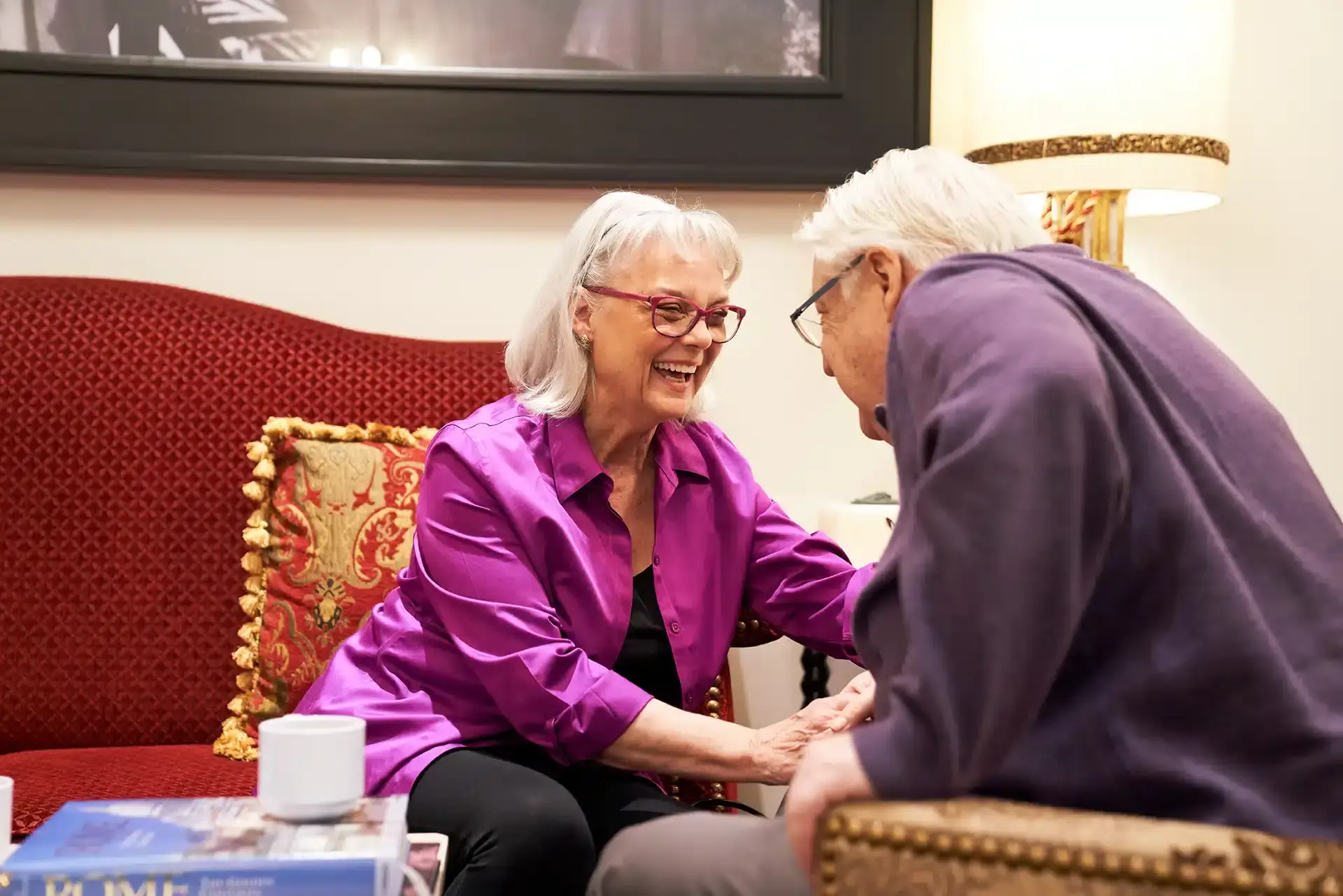
A planned path to Life's Neighborhood®
When secured memory care becomes appropriate, the transition happens inside the same Aegis community — same dining team, same nurses, same relationships.
Compare memory care and assisted living on our care-level hub.
Transitional vs. assisted vs. memory care
Assisted living fits daily ADL help without significant memory symptoms. Transitional care adds dementia-informed cueing while keeping full community access. Memory care in Life's Neighborhood® is for moderate to advanced dementia needing secured support.
Tour transitional care in person
Ask how cueing works day to day and when a move to Life's Neighborhood® would make sense.
Frequently asked questions
- Is Transitional Care the same as memory care?
- No. Transitional Care happens inside assisted living with full social access for adults with early memory loss. Memory Care is the secured Life's Neighborhood® setting for moderate to advanced dementia.
- Does my parent need a dementia diagnosis to qualify?
- A formal diagnosis is not required, but a nursing assessment is. Many residents enter with mild cognitive impairment or early Alzheimer's identified by a primary-care physician.
- Can my parents share an apartment if only one has memory loss?
- Yes. Couples stay together with separate care plans. If the partner with dementia later needs secured memory care, the well spouse can often remain and visit daily.
- How is safety handled without locking the doors?
- Motion sensors, fall-detection pendants, Inspirens AUGi, visitor check-in, and dementia-informed wellness checks — safety without unnecessary restriction.
- What happens if memory loss progresses?
- Residents can transition to Life's Neighborhood® within the same community, keeping familiar caregivers and nurses.
- How quickly can move-in happen?
- When an apartment is available, move-in often occurs within one to two weeks of the nursing assessment. Post-hospital placements can sometimes move faster.
Keep reading

7 Signs It's Time for Long-Term Memory Care
Seven concrete signs - from medication mix-ups to wandering - that show when a loved one with memory loss needs long-term care.

How to Talk to Someone With Dementia: A Caregiver's Guide
Expert-backed ways to talk with a loved one who has dementia, including Teepa Snow's VVT method, validation, and calm redirection.
Understanding and Managing Repetitive Behaviors in Dementia
Explore compassionate strategies to manage repetitive behaviors in loved ones with dementia. Learn how understanding and empathy can transform caregiving experiences.

Understanding and Easing Sundowning in Dementia Care
Learn what sundowning is, why it happens, and how caregivers can respond with empathy and structure. Explore practical strategies and discover how Aegis Living supports residents through thoughtful approaches like light therapy.