
Power of Attorney for Seniors: A Complete Guide
A plain-English guide to power of attorney for seniors - types, timing, costs, and how to choose the right agent before a crisis hits.
Published · Updated
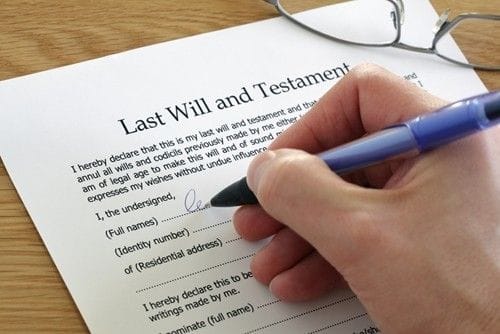
A power of attorney (POA) is a legal document that lets your parent or spouse name a trusted person to make financial, legal, or medical decisions if they can't. For seniors, the right time to sign one is before a health crisis - ideally during retirement planning, and immediately after any diagnosis affecting cognition. Without a valid POA in place, families often face costly court guardianship proceedings to manage a loved one's affairs.
An estimated 6.7 million Americans aged 65 and older are living with Alzheimer's dementia (Alzheimer's Association, 2024), which makes early legal planning urgent for a large share of families. If you're starting this process now, our pillar guide on how to find the right power of attorney lawyer walks through attorney selection step by step.
What exactly is a power of attorney, in plain English?
A power of attorney is a written authorization signed by your loved one (the principal) that gives another person (the agent or attorney-in-fact) the legal authority to act on their behalf. The agent does not have to be a lawyer - it's usually an adult child, spouse, or trusted friend.
PrincipalThe senior signing the document and granting authority. Agent (attorney-in-fact)The person authorized to act for the principal. Must be 18 or older. Fiduciary dutyThe legal obligation the agent has to act in the principal's best interest - not their own. CapacityThe mental ability to understand what a document does and the consequences of signing it. A POA is only valid if the principal has capacity at the moment of signing.According to the National Institute on Aging, advance legal planning - including a POA - is one of the most important steps families can take to honor a loved one's wishes.
Which type of power of attorney does your parent actually need?
Not every POA is the same. Choosing the wrong type is one of the most common - and most expensive - mistakes families make.
| Type | What it covers | When it's active | Best for |
|---|---|---|---|
| General (non-durable) POA | Broad financial and legal matters | While principal has capacity; ends at incapacity | Short-term tasks, like signing a home sale from out of state |
| Durable POA | Financial and legal matters | Stays in effect if the principal becomes incapacitated | Long-term planning for aging or dementia |
| Springing POA | Defined matters | "Springs" into effect only on a triggering event (e.g., a doctor declares incapacity) | Seniors who want control until the moment they truly can't act |
| Health care POA (medical proxy) | Medical decisions only | When principal can't communicate medical choices | Pairing with a living will or POLST form |
| Limited (special) POA | One specific transaction | Until the task is complete | One-time matters like a real estate closing |
For seniors, the most common combination is a durable financial POA plus a health care POA. Many families also pair the health care POA with a POLST form for end-of-life care orders, which translates wishes into actionable medical instructions.
When should a senior actually sign one?
The short answer: now, while capacity is unquestioned. Louise Aronson, MD, geriatrician at UCSF and author of Elderhood, has long argued that planning conversations should happen well before a crisis - because crisis-driven decisions are rarely the decisions older adults would have made for themselves.
Triggers that mean you should not wait another week:
- A new diagnosis of dementia, Alzheimer's, Parkinson's, or any cognitive impairment
- A recent hospitalization, fall, or stroke
- A spouse who handled all the finances has died or become ill
- Your parent is moving into assisted living or memory care
- Signs of financial exploitation or scams targeting seniors
The Alzheimer's Association emphasizes that after a dementia diagnosis, every month matters: the earlier the document is signed, the more involved your loved one can be in shaping their own future.
How do you start the conversation without a fight?
Aging parents often resist legal planning because it feels like surrendering independence. The trick is framing the POA as a safety net they control, not a loss of control.
For example, consider an 82-year-old father who has always managed the family checkbook. Telling him "we need to take over your finances" will end the conversation. Instead: "Dad, if you ended up in the hospital for a week, who do you want paying the mortgage so it doesn't go into default? Let's put that in writing - your choice."
As Teepa Snow, dementia care educator and founder of Positive Approach to Care, often reminds families: progress in care planning comes from working with the person's remaining strengths, not around them. Invite your loved one to make the choices while they still can.
What are the steps to set up a power of attorney?
- List what needs to be covered. Banking, taxes, real estate, medical care, long-term care placement, digital accounts.
- Choose the agent - and a backup. Pick someone trustworthy, organized, and geographically reasonable. Always name a successor agent in case the first can't serve.
- Hire an elder-law attorney. State laws vary; a specialist will draft a document that holds up at the bank and the hospital.
- Confirm capacity at signing. The principal must understand what they're signing. If there's any doubt, get a physician's note documenting capacity that same day.
- Sign with the required witnesses and notary. Most states require notarization; some require two witnesses.
- Distribute the document. Give copies to the agent, primary care doctor, hospital, and the senior's bank. Keep the original in a secure but accessible location.
- Review every 3-5 years or after any major life change (move, divorce, death of agent).
What does a power of attorney cost?
Costs vary by state and complexity. As a working range nationally as of 2024:
| Option | Typical cost | Best when |
|---|---|---|
| State-provided statutory form (DIY) | $0-$50 | Simple finances, no dementia, clear family situation |
| Online legal service | $35-$250 | Straightforward POA, no real estate or trust involved |
| Elder-law attorney, basic POA | $200-$500 | Most seniors with modest assets |
| Elder-law attorney, full estate package (POA + will + health directive + trust) | $1,000-$3,500+ | Dementia diagnosis, blended family, business owners, sizable estate |
The AARP financial and legal caregiving resources note that the cost of not having a POA - court-supervised guardianship - typically runs several thousand dollars in attorney and court fees, plus ongoing reporting requirements. A few hundred dollars now prevents a five-figure problem later.
How do you choose the right elder-law attorney?
An elder-law attorney does more than draft documents. They coordinate Medicaid planning, veterans' benefits, long-term care funding, and estate strategy. For families navigating veteran and spouse benefits, this expertise can be worth thousands in preserved assets.
Look for an attorney who:
- Is a member of the National Academy of Elder Law Attorneys (NAELA)
- Has handled cases involving dementia capacity
- Understands your state's specific POA statute
- Offers a flat fee for the document package, not just an hourly rate
- Will meet with the senior privately to confirm capacity and intent
What are the biggest misconceptions about POAs?
Myth: A POA lets the agent do whatever they want.
Reality: Agents owe a fiduciary duty - a legal obligation to act in the principal's best interest. Misusing the role is elder financial abuse and can result in criminal charges.
Myth: Signing a POA means giving up control today.
Reality: A durable POA can sit in a drawer for years. It only becomes operational when needed, and the principal can revoke it at any time while they have capacity.
Myth: My spouse can automatically make my decisions.
Reality: Marriage does not grant automatic financial authority. Without a POA, your spouse may need a court order to access solely-owned accounts or sign documents on your behalf.
Myth: One POA covers everything.
Reality: Financial POAs and health care POAs are typically separate documents. The Mayo Clinic's overview of advance directives explains why most families need both.
Myth: A POA survives death.
Reality: Every POA ends at the principal's death. From that point forward, the executor named in the will takes over.
How does a POA work when dementia is already in the picture?
Capacity is a moving target with Alzheimer's and other dementias - it can vary by day or even hour. The legal standard is whether the person understands, at the moment of signing, what the document does.
Consider a 78-year-old mother in the early stages of Alzheimer's whose family schedules the attorney visit for late morning, her sharpest time of day. Her physician provides a brief letter confirming capacity that week. Her attorney meets with her alone for ten minutes to confirm she understands the document. That care is what makes the POA defensible if a relative ever contests it later.
If your loved one has progressed beyond the ability to understand the document, a POA is no longer an option - guardianship or conservatorship through the courts becomes the path. This is exactly why the Alzheimer's Association urges families to act in the months after diagnosis, not years.
When can a power of attorney be revoked or end?
A POA can end in several ways:
- The principal revokes it in writing while still competent
- The principal dies
- The named agent resigns or becomes unable to serve and no successor is named
- A divorce ends spousal authority (in most states)
- A court invalidates it due to fraud, undue influence, or lack of capacity at signing
- Terms inside the document expire (e.g., a limited POA after a single transaction)
Frequently asked questions
Can a senior with dementia still sign a power of attorney?
Yes, if they have capacity at the moment of signing - meaning they understand what the document does and the consequences. Early-stage dementia does not automatically disqualify someone. Schedule the signing for the person's best time of day and ask their physician to document capacity that week.
What's the difference between durable and non-durable power of attorney?
A non-durable POA ends if the principal becomes incapacitated - exactly when families usually need it most. A durable POA stays in effect through incapacity. For aging parents, durable is almost always the right choice.
Do I need a lawyer, or can we use an online form?
For simple situations with no cognitive concerns, a state-provided statutory form may be sufficient. For any senior with a dementia diagnosis, significant assets, blended-family dynamics, or Medicaid planning needs, an elder-law attorney is worth the $200-$500 investment to prevent challenges later.
Can two people share power of attorney?
Yes. You can name co-agents who must act jointly, or co-agents who can act independently. Joint authority adds protection against misuse but can cause delays if the agents disagree or live far apart.
What happens if my parent doesn't have a power of attorney and becomes incapacitated?
The family typically must petition the court for guardianship or conservatorship - a public process that takes months, costs thousands of dollars, and gives a judge final say over who manages your parent's affairs. A POA prevents all of this.
Does a power of attorney cover nursing home or assisted living decisions?
A properly drafted POA can authorize the agent to sign admission paperwork, manage care contracts, and pay facility bills. Mention long-term care explicitly when the document is drafted so there's no ambiguity at move-in.
Plan now, so your family doesn't have to scramble later
A signed power of attorney is one of the most loving gifts a senior can give their family - it removes uncertainty during the hardest moments. If you're also exploring long-term care, Aegis Living communities support families through every stage of this planning. Find an Aegis Living community near you or contact our team to talk through what's next.
Frequently asked questions
- Can a senior with dementia still sign a power of attorney?
- Yes, if they have capacity at the moment of signing - meaning they understand what the document does and its consequences. Early-stage dementia does not automatically disqualify someone. Schedule signing for the person's sharpest time of day and ask their physician to document capacity that week.
- What's the difference between durable and non-durable power of attorney?
- A non-durable POA ends if the principal becomes incapacitated - exactly when families usually need it most. A durable POA stays in effect through incapacity. For aging parents, durable is almost always the right choice.
- Do I need a lawyer, or can we use an online form?
- For simple situations with no cognitive concerns, a state statutory form may suffice. For any senior with a dementia diagnosis, significant assets, blended-family dynamics, or Medicaid planning needs, an elder-law attorney is worth the $200-$500 to prevent challenges later.
- Can two people share power of attorney?
- Yes. You can name co-agents who must act jointly, or co-agents who may act independently. Joint authority adds protection against misuse but can cause delays if the agents disagree or live far apart.
- What happens if my parent doesn't have a power of attorney and becomes incapacitated?
- The family typically must petition the court for guardianship or conservatorship - a public process that takes months, costs thousands of dollars, and gives a judge final say over who manages your parent's affairs. A POA prevents all of this.
- Does a power of attorney cover nursing home or assisted living decisions?
- A properly drafted POA can authorize the agent to sign admission paperwork, manage care contracts, and pay facility bills. Mention long-term care explicitly when drafting so there's no ambiguity at move-in.
Related reading
- What Is a POLST Form? End-of-Life Orders Explained
A POLST form converts a seriously ill patient's end-of-life wishes into binding medical orders. Here's how it works and who needs one.…
- How to Find the Right Power of Attorney Lawyer
A step-by-step guide to choosing the right power of attorney lawyer - what to ask, what to bring, and when to start before capacity slips.…
- VA Aid and Attendance Benefits for Veterans and Spouses
A plain-English guide to VA Aid and Attendance benefits, eligibility, payment amounts, and how to apply for veterans and surviving spouses.…
- How to Protect Seniors From Financial Fraud: 10 Tips
Spot the warning signs of elder fraud and protect your parent's finances with 10 practical, expert-backed tips you can use today.…
Have questions about senior living?
Our family advisors are here to help — no pressure, no script.